

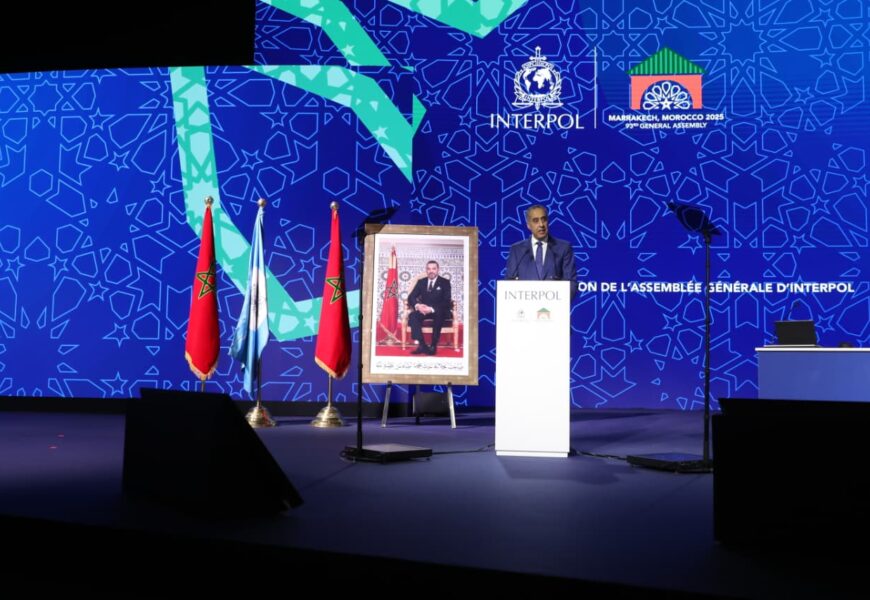
The Director General of the DGSN-DGST pole, Abdellatif Hammouchi, emphasized at the opening of the 93rd session of the Interpol General Assembly, held in Marrakech until 27 November, the importance of a coordinated global response to the worsening of transnational security threats.
In his inaugural address at the 93rd session of Interpol’s General Assembly, Abdellatif Hammouchi highlighted “the expansion of criminal structures into the digital space, the interconnection of entities and networks across continents, as well as the emergence of regional terrorist hubs.” These alarming developments, he said, “make security a matter requiring a new collective vision.”
The Director General of the DGST-DGSN also stressed that organized crime and violent extremism “recognize neither geographical borders nor administrative boundaries,” which, he added, requires “the building of common and indivisible security architectures, to which security services in various countries contribute in close cooperation with Interpol.”

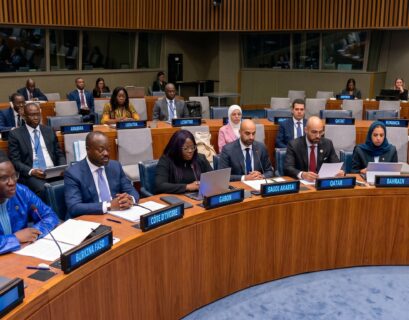
Hammouchi recalled that Morocco, under the High Directives of His Majesty King Mohammed VI, has designed and implemented a security approach that reconciles the preservation of public safety with the respect for human rights. He nevertheless reminded the participants from 196 countries that “the protection of security is no longer merely a local mission.”
With the rise of cybercrime and the emergence of hybrid threats targeting state institutions and stability, “it has become essential to develop fast and secure mechanisms for information exchange and to conduct joint operations involving several countries and sometimes several continents,” Hammouchi insisted.
He also underlined “the transformation in the nature of threats, which requires states to strengthen institutional cooperation, intensify mutual assistance, and develop the work of national security services in order to keep pace with this new reality.”
Abdellatif Hammouchi concluded his address by stating that “if crime does not recognize borders, then security too must rely on regional and international extensions capable of confronting challenges and containing their risks.”