It comes as no surprise to hear American lawmakers describe the relationship between Morocco and the United States as “strategic,” “exceptional,” and “historic.” This perception reflects an alliance that has been carefully built and sustained over decades, with the Moroccan monarchy serving as its backbone—guaranteeing stability, continuity, and a forward-looking vision.
The foundations of this partnership are anchored in a series of landmark agreements that have consistently elevated the bilateral relationship. The Free Trade Agreement, signed in 2004, remains unique in Africa, granting Morocco privileged access to the U.S. market and stimulating mutual investment and trade. Military and security cooperation has strengthened Morocco’s status as a Major Non-NATO Ally, reinforcing joint efforts to combat terrorism and ensure regional stability across the MENA and Sahel regions. Looking ahead, the technological domain, particularly in advanced industries and artificial intelligence, is emerging as a promising frontier. The complementarity between American innovation and Morocco’s ambition to position itself as a continental hub for high technology creates fertile ground for transformative initiatives.
Duke Buchan: A Catalyst for the Next Chapter
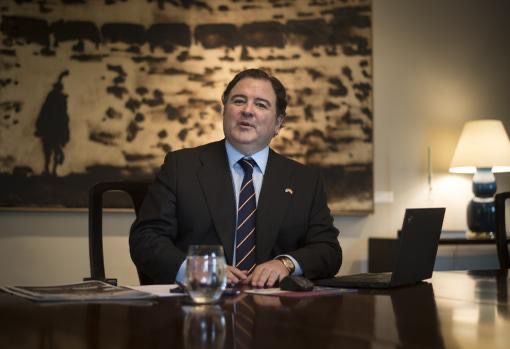
The bilateral relationship is now poised for an important leap forward with the involvement of a prominent representative of the U.S. administration: Duke Buchan. A close ally of the American president and a steadfast supporter of his foreign policy vision, Buchan also brings deep expertise in the economic and geopolitical dynamics of the Mediterranean and North Africa.
His trajectory reflects both diplomatic and entrepreneurial legitimacy. As U.S. Ambassador to Spain from 2017 to 2021, he pursued an active diplomacy, strengthening transatlantic ties in the realms of economics and security. As a successful businessman and founder of a thriving investment firm, he has cultivated a global outlook and an instinct for strategic opportunity. These qualities uniquely position him to elevate Moroccan–American cooperation to a higher plane, particularly by advancing an economic partnership centered on innovation, investment, and energy security.
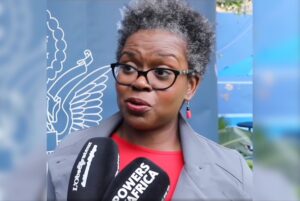
A renewed vision of partnership also requires an agile and effective consular presence. Here, Morocco and the United States already benefit from a strong asset: the U.S. Consulate in Casablanca, widely recognized for its professionalism and efficiency. Under the leadership of Marissa Scott, U.S. Consul General in Casablanca, it has distinguished itself as a vital bridge with Moroccan society, streamlining services and building trust. This institutional strength provides the incoming ambassador with a well-prepared platform fully aligned with the strategic vision guiding bilateral relations.
What lies ahead is not merely the continuation of a historic alliance but the shaping of a next-generation partnership. Tradition and modernity converge: tradition, through the recognition of an enduring alliance built on shared values and trust; modernity, through the expansion of cooperation into cutting-edge sectors—digital economy, energy transition, scientific research, and artificial intelligence.
In this context, the convergence of political will in both capitals, reinforced by the leadership of figures such as Duke Buchan and the solid operational foundation of the U.S. consular network in Morocco, heralds an ascending phase in bilateral relations. Morocco and the United States, bound by history and propelled by shared ambition, are well-positioned to transform their alliance into a strategic driver of growth, innovation, and regional stability.