

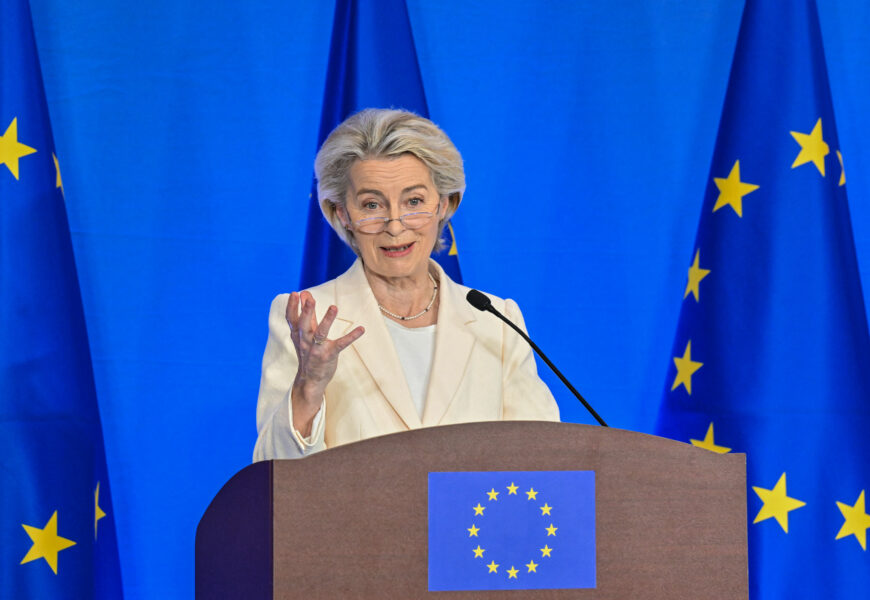
Several measures in the European Union’s (EU’s) nineteenth sanctions package against Russia, which European Commission President Ursula von der Leyen announced on Friday, appear tailored to please US President Donald Trump. Yet perhaps the most important signal Brussels aimed to send was that the EU remains committed to phasing out the little that remains of Russian energy imports to the bloc.
Why?
Last week, Trump reportedly dialed in unannounced to a meeting between a delegation of EU sanctions experts and US officials, during which he called for the EU to enact steep tariffs on India and China. Then over the weekend, the US president posted on social media that NATO countries should place “50% to 100% TARIFFS ON CHINA, to be fully withdrawn after the WAR with Russia and Ukraine is ended.”
The most common take on Trump’s post is that he is asking for NATO (most of which are also part of the European Union) to do impossible things as a delaying tactic in order not to have to impose sanctions himself.
It is true that this administration takes a dim view of sanctions, which it sees as one of the reasons why countries are looking for alternatives to the dollar. It is also undeniable that Trump is reluctant to impose additional sanctions on Russia. His administration has explained that imposing additional sanctions would risk breaking the already thin ice on which negotiations rest.
And yet, according to the new etiquette of transatlantic relations, the Europeans accept that they must at least engage with Trump’s demands, even when the opening bid is outlandish. The EU and the United Kingdom are being asked to say to the world that they too are giving up on sanctions and adopting the United States’ weaponization of tariff policy. While their strategic dependence on the United States is well known, it is fundamentally against their interests to be perceived as so dependent that they have no say on their commercial relations with India and China.
Author : Charles Lichfield is the deputy director and C. Boyden Gray senior fellow of the Atlantic Council’s GeoEconomics Center.